Understanding Pacific Grove Historic Preservation Guidelines
March 5, 2026
March 5, 2026
Pacific Grove is home to one of the largest collections of preserved 19th-century residences in California, and the city takes protecting that legacy seriously. If you own or plan to buy a home in Pacific Grove, understanding how the local historic preservation system works can save you time, money, and frustration when planning renovations or improvements. J.R. Rouse and the team at J.R. Rouse Properties Group work with buyers and sellers in Pacific Grove every day, and questions about historic designation come up constantly. This guide breaks down what the rules actually require, how the review process works, and what financial benefits may be available to owners of historic homes.
The Historic Resources Inventory (HRI) is Pacific Grove’s official list of locally designated historic properties. Maintained by the city’s Community Development Department and administered by the Historic Resources Committee (HRC), the HRI currently includes over 1,350 structures. The inventory was first established in 1978 through a matching grant from the California State Office of Historic Preservation, and it primarily documents properties built between the 1880s and 1927.
A property can be added to the HRI based on criteria found in Municipal Code Section 23.76.025. These criteria evaluate whether a structure has significance as part of the city’s development history, represents a strong example of a particular architectural style, is associated with notable individuals or organizations, or is the work of a recognized architect or master builder. Notably, the property owner’s consent is not required for a building to be placed on the inventory.
|
Local Tip: If you’re unsure whether a property is on the HRI, contact the Pacific Grove Community Development Department at (831) 648-3190 or check the city’s Historic Resources webpage. Knowing a home’s status before you buy or begin renovation planning is one of the smartest moves you can make. |
The HRC is a five-member committee appointed to staggered two-year terms. At least one member must be a licensed architect, engineer, or contractor with preservation experience, and one seat is reserved for a representative of the Pacific Grove Heritage Society. The committee evaluates nominations for inclusion, hears removal requests, and advises the city on preservation matters.
In 2018 and 2019, the city commissioned Page & Turnbull, a San Francisco-based preservation consulting firm, to conduct a comprehensive update of the entire HRI. The survey reviewed all 1,200-plus properties on the list and recommended removing those that no longer met eligibility criteria due to significant alterations or loss of historic integrity. The final survey report was delivered to the city in October 2019. Some properties that lost their individual HRI status were recommended for a Neighborhood Character list, acknowledging their contribution to the overall feel of the community even if they no longer qualified as individually significant.
Properties are evaluated against seven qualities of integrity: location, design, setting, materials, workmanship, feeling, and association. Buildings that retain these qualities and meet the significance criteria remain on the HRI. Those that have been substantially altered may be removed.
If your home is on the HRI, any proposed exterior changes visible from the public right-of-way will require review. The specific permit you need depends on the scope and visibility of the work. Pacific Grove uses a tiered system that ranges from simple over-the-counter approvals for minor, in-kind replacements to full Architectural Permits and Historic Preservation Permits for larger projects reviewed by the Architectural Review Board (ARB) or HRC.
All proposed changes to historic properties must comply with the Secretary of the Interior’s Standards for the Treatment of Historic Properties. These federal guidelines, published by the National Park Service, are the benchmark used by cities and review boards across California. The Standards emphasize preserving the original character of a building, repairing rather than replacing historic materials, and ensuring that any new additions are compatible with but distinguishable from the original structure.
|
Project Type |
Non-Historic Home |
HRI-Listed Home |
|
Window replacement (in-kind) |
Building permit |
Building permit + counter review |
|
Window style change |
Architectural permit |
Historic Preservation Permit (HRC review) |
|
Porch repair (matching materials) |
Building permit |
Building permit + counter review |
|
New addition (visible from street) |
Architectural permit (ARB) |
Architectural permit + HRC review |
|
Siding replacement (different material) |
Architectural permit |
Historic Preservation Permit |
|
Interior remodel |
Building permit only |
Building permit only (no historic review) |
|
Demolition |
Permit required |
Historic Demolition Permit + public hearing |
|
Main Takeaway: Interior remodels generally don’t trigger historic review. The focus is on exterior changes that are visible from the street. You can modernize kitchens, bathrooms, and living spaces freely as long as you follow standard building codes. |
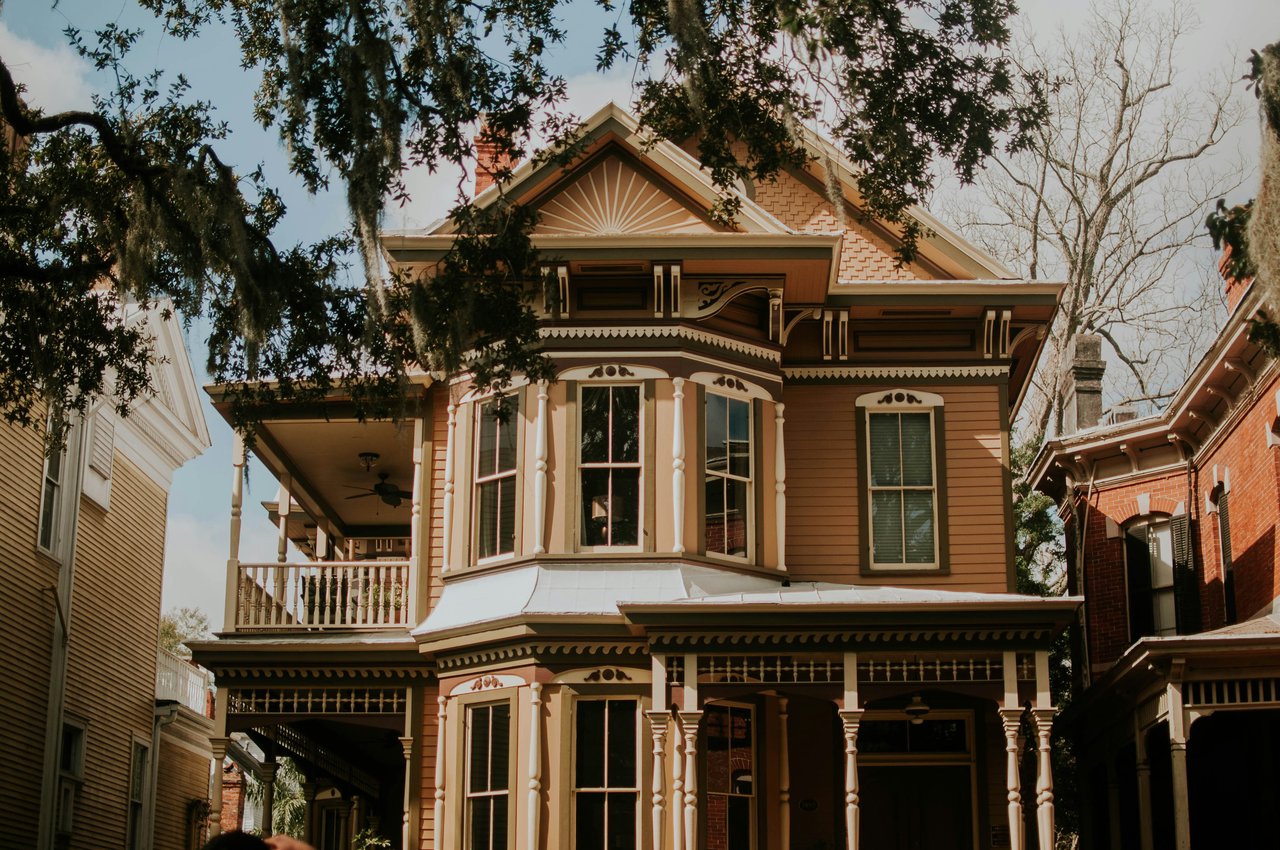
When the city evaluates a proposed change to a historic property, reviewers look specifically at character-defining features. These are the physical elements that make a building recognizable as a product of its era and architectural style. In Pacific Grove, where Victorian cottages, Queen Anne residences, and early Craftsman bungalows are common, these features often include:
Primary roof forms, including gables, hips, and cross-gable configurations
Original wood-sash windows and their muntin patterns
Front porches, bay windows, and their decorative brackets or columns
Wood lap siding, shingle siding, or original cladding materials
Decorative trim, cornices, and fretwork
Original front doors and associated hardware
Chimneys, whether masonry or stucco
One rule that stands out to most historic homeowners in Pacific Grove is the strict requirement for wood windows. Vinyl and metal replacement windows are not permitted on HRI-listed properties. If your original wood windows need attention, the city generally expects repair first and in-kind replacement only when repair is no longer feasible.
The best approach is to contact the Community Development Department early, before you finalize plans or hire a contractor. Staff can tell you exactly which permits your project requires and whether it will need to go before the ARB, the HRC, or both.
Here’s a general overview of what to expect:
Step 1: Pre-application consultation. Meet with planning staff to discuss your project scope and the property’s historic status. This meeting is free and can prevent costly redesigns later.
Step 2: Submit your application. Include project plans, material specifications, photographs of the existing conditions, and a description of how the proposed work aligns with the Secretary of the Interior’s Standards.
Step 3: Staff review. Minor projects may be approved at the counter or administratively. Larger or more complex projects are scheduled for a committee hearing.
Step 4: Committee hearing (if required). The ARB or HRC reviews your plans in a public meeting. You’ll have the opportunity to present your project and respond to questions.
Step 5: Decision and permits. Once approved, you can pull your building permits and begin work. Conditions of approval may require specific materials, colors, or construction methods.
For additions to historic buildings, the city follows a set of design principles. New construction should be placed on an inconspicuous side or rear elevation, set back from the original wall plane so the historic form remains distinguishable, and designed to be compatible with the original structure without replicating it. Second-story additions typically must be set well back from the front roof edge.
Pacific Grove participates in the Mills Act program, California’s most significant financial incentive for owners of historic properties. Under the Mills Act (California Government Code Sections 50280-50290), qualifying property owners can enter into a contract with the city that provides substantial property tax reductions in exchange for ongoing maintenance and preservation of the home.
Key details of the Mills Act program:
Contracts run for an initial term of 10 years and automatically renew each year, creating a rolling agreement that is always 10 years long.
The county assessor recalculates the property’s value using a capitalization-of-income method, which often results in a significantly lower assessed value compared to market rates.
Property owners agree to maintain the home, make improvements consistent with preservation standards, and allow periodic inspections.
Cancellation carries a penalty equal to 12.5% of the property’s current fair market value.
Before applying, schedule a pre-application meeting with the city’s planning staff to confirm your property’s eligibility and understand the application requirements. Not all HRI-listed properties have active Mills Act contracts, and the city may cap the number of new contracts it approves each year.
|
Local Tip: If you’re buying a home that already has a Mills Act contract, that agreement transfers with the property. Ask your agent to review the contract terms and any associated work plan before closing. The tax savings can be substantial, but so are the maintenance obligations. |
Even if your home is not listed on the Historic Resources Inventory, it may still be subject to some level of review. Pacific Grove classifies buildings 50 years or older that have not been formally evaluated as having an “undetermined historic status.” If you propose visible exterior changes to one of these properties, the city may require an Initial Historic Screening before issuing permits.
Additionally, all single-family residences in Pacific Grove, whether historic or not, are subject to the city’s Design Guidelines for Single-Family Residences and the Architectural Review Board’s oversight for certain types of exterior work. So even owners of newer homes should check with the Community Development Department before starting a major project.
If you’re searching for homes for sale on the Monterey Peninsula, it’s worth understanding which properties carry historic designations and which don’t. Your agent can help you research this during the buying process so there are no surprises after closing.
The Heritage Society of Pacific Grove is a nonprofit organization founded in 1975 that works alongside the city to promote preservation and restoration of significant buildings. The Society runs the popular Green Plaque program, which recognizes historic homes with the distinctive name plaques you see throughout Pacific Grove’s older neighborhoods.
Receiving a green plaque is voluntary and requires the homeowner to apply. The Heritage Society researches the home’s history, identifies its original owner and construction date, and awards the plaque if the home qualifies. While the plaque itself doesn’t create additional legal restrictions, it signals that the home has been recognized for its historic and architectural value.
The Heritage Society is also a valuable resource for homeowners who want to learn more about their property’s history. Between the Society, the Pacific Grove Public Library, the Museum of Natural History, and city permit records, there’s a wealth of information available for anyone interested in tracing a home’s story.
Renovating a historic home in Pacific Grove doesn’t have to be intimidating. Homeowners who approach the process with the right information and expectations tend to have smooth experiences. Here are some practical tips:
Talk to the city first. A 15-minute conversation with planning staff can clarify your permit requirements and save weeks of back-and-forth later.
Hire a local architect. Architects who have worked in Pacific Grove before understand the review guidelines and can design plans that satisfy both preservation standards and your personal vision.
Inspect before you plan. Foundation integrity, electrical systems, plumbing, and roof condition are the real priorities in older homes. Address structural concerns before cosmetic ones.
Repair before you replace. The city favors repair of original materials over replacement. When replacement is necessary, in-kind materials (same type, profile, and dimensions) are expected for historic homes.
Document everything. Photographs of existing conditions, original architectural details, and any previous alterations will strengthen your permit application.
Think long-term. Many of Pacific Grove’s most successful restorations were done gradually over years, not in a single project. Prioritize what matters most and plan your renovation in phases.
Living in a historic home in Pacific Grove connects you to a community that values craftsmanship and architectural heritage. The preservation guidelines exist to protect that shared character, and most homeowners find that working within them leads to thoughtful, beautiful results.
Yes. Pacific Grove’s historic review process focuses on exterior changes visible from the public right-of-way. Interior remodels, including kitchen and bathroom updates, are governed by standard building codes and do not require review by the Historic Resources Committee or the Architectural Review Board.
Contact the Pacific Grove Community Development Department at (831) 648-3190 or visit the city’s Historic Resources webpage. The HRI is a public document, and staff can confirm a property’s status quickly. If you’re in the process of buying, ask your agent to check this as part of your due diligence.
Unpermitted work on an HRI-listed property can result in code enforcement action, fines, and a requirement to reverse the changes. In some cases, significant unauthorized alterations can be grounds for removing a property from the HRI, which eliminates eligibility for programs like the Mills Act. Always check permit requirements before starting work.
No. Pacific Grove requires wood windows on HRI-listed properties. The city expects owners to repair original windows when possible and use in-kind wood replacements when repair is not feasible. New windows on additions should match the style, scale, and material of the originals.
Research consistently shows that historic designation tends to support or increase property values over time. Buyers who seek out homes in Pacific Grove are often specifically drawn to the architectural character that preservation protects. Additionally, Mills Act tax savings can make ownership more affordable, which is an attractive feature for potential buyers.
Whether you’re considering a Victorian cottage, a Craftsman bungalow, or a home in one of the Monterey Peninsula’s many neighborhoods, understanding the preservation landscape is a key part of making a confident purchase. Have questions about historic homes or what to expect from the review process? J.R. Rouse Properties Group brings decades of experience helping clients buy and sell on the Monterey Peninsula. Reach out today to start the conversation.
Stay up to date on the latest real estate trends.

Our team listens closely, works tirelessly, and puts your goals at the center of everything we do. Whether you're buying, selling, or simply exploring your options, we’re here to guide you with expertise, every step of the way.

J.R. Rouse Properties Group
490 Lighthouse Ave Pacific Grove CA 93950 J.R. Rouse | CA DRE# 01299649 | MLS ID 70010296