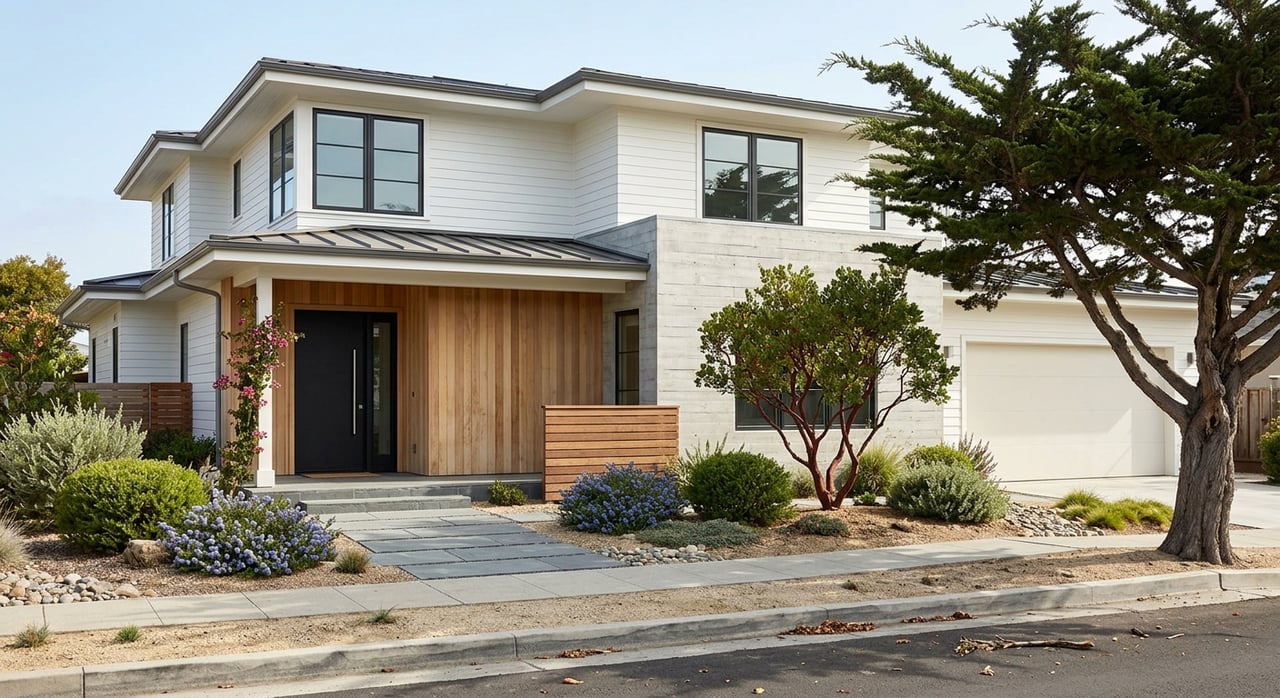
Marina CA Neighborhoods and Homes for Coastal Buyers
July 2, 2026
July 2, 2026
If you want to live near the coast without stretching into some of the Monterey Peninsula’s highest price points, Marina deserves a closer look. Many buyers are drawn to the beach access, trail network, and easier entry point compared with Monterey or Pacific Grove, but they are often surprised by how varied Marina’s housing choices really are. Understanding where the city feels beach-adjacent, walkable, or more master-planned can help you focus your search and avoid mismatched expectations. Let’s dive in.
Marina offers a different value proposition than many nearby coastal markets. The city’s estimated population was 23,256 in July 2025, and the median value of owner-occupied homes was $818,700 in 2020 to 2024. That places Marina below Monterey at $1,076,300 and Pacific Grove at $1,190,400, while sitting slightly above Seaside at $787,100.
For many coastal buyers, that pricing context matters. Marina is often seen as a more attainable way to stay close to beaches, bike routes, and the broader Monterey Peninsula without shopping only in luxury price ranges. It is not simply a budget version of other Peninsula towns either, because the housing mix is broader than many people expect.
The city’s 2024 housing element shows that about 58% of Marina’s housing stock is single-family, while about 26% is in complexes of five or more units. That mix creates more options for buyers who want detached homes, attached homes, townhomes, or other lower-maintenance choices. In practical terms, Marina gives you more than one way to live near the coast.
One of the most important things to understand is that Marina’s shoreline is mostly public beach and dune land, not a long strip of private oceanfront houses. Marina State Beach is a day-use beach that runs through the Marina Dunes Natural Preserves, and Fort Ord Dunes State Park includes 837 acres and four miles of ocean beach. That means most buyers are choosing beach proximity rather than true waterfront ownership.
This distinction shapes the entire home search. In Marina, the big question is usually not, “Which oceanfront home style fits me?” Instead, it is, “Do I want to be closest to the coast, closer to downtown convenience, or in a newer planned neighborhood?” Once you view the city through that lens, the choices become much clearer.
For many buyers, the west side is Marina’s most clearly coastal-feeling residential area. This is where you get the easiest access to Marina State Beach, Fort Ord Dunes, and the surrounding trail network. If you picture morning walks near the dunes or quick access to outdoor recreation, this part of Marina will likely stand out.
West-side housing is generally beach-adjacent rather than waterfront. One established example is Cypress Cove II, a subdivision of 110 single-family homes in the westerly part of Marina near the Highway 1 and Reservation Road interchange. That pattern points more toward conventional detached homes on subdivision lots than resort condos or large private oceanfront estates.
Sea Haven, also called Marina Heights, is the biggest newer housing pocket on the west side. City documents describe a 1,050-home project on roughly 248 acres between Imjin Road, Abrams Drive, and 12th Street. The approved mix includes 102 townhomes, single-family dwellings, bridge homes, and estate lots.
This variety gives buyers more flexibility than they may expect in a coastal area. You may find a fit whether you want a lower-maintenance attached option, a detached home with a more traditional layout, or a larger home site within a planned community setting.
Sea Haven was planned with sidewalks, trails, greenbelts, alleys, roundabouts, and a less car-centered street layout. That creates a more intentionally designed neighborhood environment than an older subdivision built lot by lot over time. For buyers who like newer infrastructure and a cohesive neighborhood plan, that can be a major plus.
At the same time, the west side comes with real coastal exposure. Marina State Beach is known for hang gliding and surfing, and the weather can shift quickly enough that layered clothing is recommended. You should also expect more wind, sand, and marine exposure here than in inland parts of the city.
The west side is often the strongest fit if your top priorities are:
The tradeoff is straightforward. You get a stronger coastal feel, but you may also get more weather exposure and some special water restrictions in Sea Haven and the Dunes developments.
If you care more about convenience and connectivity than large lots, downtown Marina deserves serious attention. The city’s downtown core centers on the Reservation Road and Del Monte Boulevard corridor, and it is evolving toward a more pedestrian-friendly urban center. The Downtown Vitalization Specific Plan, adopted in October 2024, aims to add mixed-use buildings, retail and office space, and new housing.
Existing housing in the downtown plan area is already mixed. The city’s environmental review says the area includes about 2,301 dwelling units, with roughly half of the residential land use in multifamily form and the rest split between attached and detached single-family homes. That mix points to a more urban pattern than buyers often find elsewhere on the Peninsula.
In practical terms, downtown Marina home styles tend to mean smaller detached homes, duplexes, smaller multifamily buildings, and future mixed-use housing near commercial space. Many parcels in the area are small and under multiple ownerships, which tends to support infill development or lot consolidation rather than oversized rebuilds on expansive home sites.
The city’s design guidance for transition and multifamily residential areas emphasizes doors and windows facing the street, parking behind or to the side, and landscaped setbacks. For you as a buyer, that suggests a streetscape where walkability and public-facing design matter more than private yard size.
Downtown also offers Marina’s most direct access to the Monterey Bay Coastal Recreation Trail. The city notes that this Class I bikeway runs from Castroville to Pacific Grove, and Marina also has Class II bike lanes along Reservation Road, Crescent Avenue, and California Avenue. Del Monte Boulevard streetscape improvements are intended to improve pedestrian and bicycle safety.
Downtown Marina is often a strong match if you want:
The tradeoff is less privacy and fewer large-lot options. But if your routine is shaped by convenience, street connectivity, and being closer to Marina’s evolving urban core, downtown can be a smart place to focus.
Marina’s inland and northern areas tell a different housing story. Much of the city’s future growth is tied to major specific plan areas, including Armstrong Ranch, University Village, and the Downtown Vitalization Area. That means a meaningful share of Marina’s housing options comes from larger master-planned development rather than older neighborhood patterns.
Marina Station is one of the clearest examples. Located in northern Marina on the 320-acre Armstrong Ranch site, it is planned for about 1,360 homes along with commercial, office, and business park space. The housing mix ranges from cottages and small-lot homes to apartments, with parks and open space built into the plan.
University Village, also known as The Dunes, adds another layer to Marina’s inland options. The city’s housing element says Village Homes within University Village average about 8 dwelling units per acre, while the broader residential designation can reach 35 units per acre. That density range suggests a mix of detached homes, attached homes, and higher-density housing rather than one uniform product type.
Sea Haven also overlaps with this broader planned-community story. While it has strong west-side appeal, it shares the same master-planned logic of varied housing types, intentional street design, and newer neighborhood infrastructure.
Inland planned communities usually feel newer, more consistent, and more structured than the older downtown grid. You are more likely to see predictable neighborhood form, integrated open space, and a wider range of floor plans. For many buyers, that kind of consistency makes the search easier.
The tradeoff is character. These areas are less likely to feel like an older coastal village, and many still function more like suburban car-access neighborhoods in everyday life. If you want a neighborhood that feels polished and newer, that may be a benefit rather than a drawback.
Inland planned communities are often best for buyers who want:
Marina also has several mobile home parks, including Lazy Wheel, Marina Del Mar, Cypress Square, El Rancho, and El Camino. For some buyers, these can be part of the broader ownership conversation when comparing housing types and entry points.
If you are trying to narrow your search, Marina can be broken into three practical lifestyle buckets. Each one serves a different kind of coastal buyer, and none is automatically better than the others. The right fit depends on how you want to live day to day.
| Area | Best For | Common Home Patterns | Main Tradeoff |
|---|---|---|---|
| West-side / beach-adjacent | Outdoor access and coastal feel | Detached homes, townhomes, planned neighborhoods | More wind, sand, and weather exposure |
| Downtown core | Walkability and convenience | Smaller homes, duplexes, multifamily, mixed-use | Less privacy and fewer large lots |
| Inland planned communities | Newer homes and variety | Cottages, small-lot homes, attached housing, apartments | Less historic or village-like feel |
This simple framework can save you time. Instead of searching Marina as one single market, it helps to search by lifestyle pattern first and then by home type.
For buyers comparing towns across the Monterey Peninsula, Marina stands out because it combines relative value with housing variety. It generally offers lower home values than Monterey and Pacific Grove while keeping you close to beaches, bike paths, and Peninsula destinations. That balance is a big reason Marina keeps showing up on short lists for primary-home buyers and move-up buyers.
It also helps that Marina is not locked into one housing identity. You can look for a detached home near the dunes, a smaller place closer to downtown, or a home in a newer planned neighborhood with a more uniform feel. That flexibility gives you more ways to align your home search with your lifestyle, budget, and long-term goals.
If you want help sorting through Marina’s neighborhoods and comparing them with the rest of the Peninsula, J.R. Rouse Properties Group offers a senior-led, consultative approach built around clear guidance and local market insight.
Stay up to date on the latest real estate trends.
Our team listens closely, works tirelessly, and puts your goals at the center of everything we do. Whether you're buying, selling, or simply exploring your options, we’re here to guide you with expertise, every step of the way.
J.R. Rouse Properties Group
574 Lighthouse Ave Pacific Grove CA 93950 J.R. Rouse | CA DRE# 01299649 | MLS ID 70010296