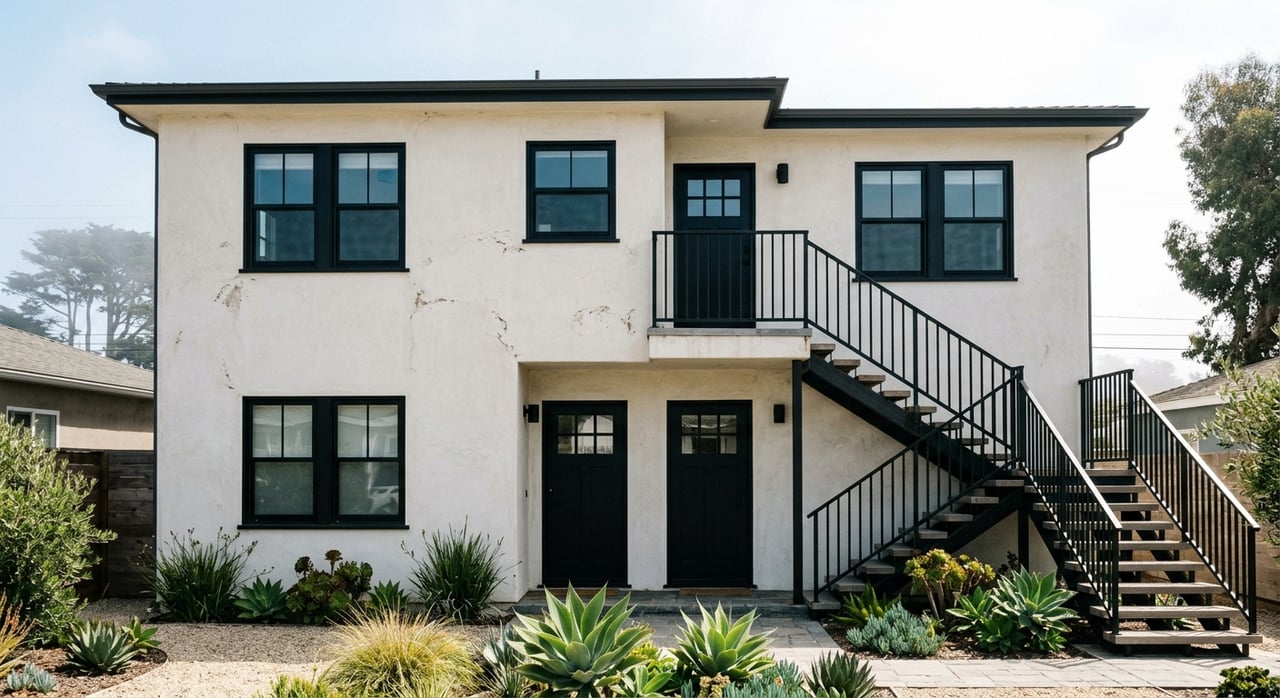
Evaluating Investment And Multi-Unit Properties In Seaside
July 23, 2026
July 23, 2026
Looking at investment or multi-unit property in Seaside can feel promising and complicated at the same time. You may see a coastal market with strong rental demand, but you also have to weigh older housing stock, repair costs, and California rental rules. The good news is that with the right lens, Seaside can be easier to evaluate than it first appears. Here’s how to think through the numbers, the property condition, and the local context before you make a move.
Seaside has a renter-heavy profile that matters if you are evaluating income property. Census QuickFacts shows a population of about 31,636, roughly 10,371 households, and an owner-occupied housing rate of 35.4%. That points to a market where renting is a meaningful part of the local housing picture.
The city also has a working-age population, with a median age of 34 and median household income of $85,311. For you as an investor, that can support steady rental demand across a range of everyday housing types. It is less about chasing a luxury niche and more about understanding practical demand in a coastal community.
City planning documents describe Seaside as primarily residential, with a tourist- and service-oriented economy. They also identify the U.S. Department of Defense center in Seaside as a major employer, while California State University Monterey Bay and Monterey College of Law add housing demand from students and staff. That mix helps explain why rental demand stays relevant across different tenant groups.
One of Seaside’s most important investment traits is its position within the broader Monterey Peninsula. The market sits below several nearby coastal areas on purchase price, while rents remain in a similar regional band. That can make Seaside worth a closer look if you are focused on basis and long-term hold potential.
Here is the directional market comparison from the research provided:
| Market | Median sale price | Average rent |
|---|---|---|
| Seaside | $861,484 | $3,061 |
| Monterey | $999,402 | $2,895 |
| Pacific Grove | $1,361,685 | $3,495 |
| Marina | $941,936 | $3,145 |
| Carmel-by-the-Sea | $3,492,910 | $6,000 |
| Del Monte Forest / Pebble Beach area | $2,659,106 | $6,900 |
The big takeaway is simple. Seaside’s acquisition cost is materially lower than Monterey, Pacific Grove, Carmel-by-the-Sea, and the Pebble Beach area, but it still participates in the same coastal rental corridor. That does not automatically make every property a good deal, but it does mean your purchase basis may matter as much as, or more than, top-line rent.
It also helps to keep rent data in perspective. The ACS median gross rent is $2,409, while Zillow’s average asking rent is $3,061. Those numbers are not directly comparable, but together they suggest that Seaside is not a low-cost rental market.
If you are searching for duplexes, small multi-unit buildings, or single-family rentals, Seaside offers a meaningful mix. According to the city’s Consolidated Plan, about 60% of the housing stock is single-family detached and 25% is multi-unit. That gives you more than one investment path to consider.
Just as important, much of the housing stock is older. Roughly 73% of Seaside homes were built before 1980, with most residential development happening between 1950 and 1979. Older properties can create value-add opportunity, but they can also bring more maintenance risk.
That age profile should shape your due diligence from day one. A building that looks attractive on paper may need major systems work, deferred maintenance correction, or habitability-related repairs. In Seaside, the condition story is often just as important as the rent story.
For older rentals and small multifamily properties, physical due diligence is critical. The city reports that Seaside uses California Health and Safety Code Section 17920.3 for habitability standards, and code enforcement is complaint-based. That means some issues may not become obvious until you inspect deeply or review the property carefully.
The city’s planning documents list common substandard conditions such as inadequate ventilation, crawl-space clearance problems, and wood elements in contact with the ground or exterior paving. Those issues can affect repair budgets, insurance considerations, and the speed at which you can turn a unit between tenants. In practical terms, an older duplex with hidden condition issues can perform very differently from a similar property with updated systems.
Lead-paint risk also deserves attention in pre-1980 housing. You do not need to assume every older property is a problem, but you do need to verify the condition and history of the building. For many Seaside opportunities, your inspection strategy can make or break the investment case.
In Seaside, strong investing starts with disciplined assumptions. Because the market is coastal, active, and full of older homes, it helps to avoid relying on broad city averages alone. You want to underwrite the specific property, the specific block, and the likely repair path.
Focus on these core questions:
This is where careful local analysis matters. A property that appears to pencil at first glance may look very different after realistic repair costs, turnover time, and regulated rent-growth assumptions are factored in.
Seaside does not appear to be an oversupplied rental market, but that does not mean every unit leases instantly at any price. Zillow shows 43 active rentals in Seaside and labels the market as cool. That suggests renters may still be selective about pricing and condition.
For you, this means lease-up strategy should be grounded in the actual competition. If nearby units are more updated, better presented, or priced more realistically, an older property may sit longer than expected. That is why you should model some vacancy and make-ready time rather than assuming immediate occupancy.
The same point applies to turnover planning. In a small multi-unit property, even one vacancy can have an outsized effect on your monthly income. That is another reason Seaside underwriting often comes down to discipline, not optimism.
Seaside is also a relatively fast resale market. Research shows homes selling in about 23 days, with a median sale price of $861,484 over the last three months and a sale-to-list ratio near 99.3%. If a property is well priced, it may not sit long.
That pace can create pressure, especially when you are trying to evaluate repairs, rent potential, and regulatory exposure. The answer is not to rush blindly. It is to prepare your decision framework before you start making offers.
A clear buying process can help you stay calm when the right property appears. If you already know your target basis, repair tolerance, and income goals, you can move faster with more confidence.
If you are buying a rental in Seaside, statewide tenant protection rules may affect your investment. California’s Tenant Protection Act limits annual rent increases for many residential units to 5% plus CPI, up to 10%. It also creates statewide just-cause eviction protections after 12 months or 24 months of lawful occupancy, depending on the tenancy.
The law includes exemptions, including many newer units and some single-family homes or condos when ownership and notice requirements are met. Because application can vary by property, this is something you should verify carefully during due diligence. For an investor, the key point is simple: projected rent growth should be based on the actual legal framework, not wishful assumptions.
Seaside may appeal to you if you want Monterey Peninsula exposure without jumping straight to the much higher acquisition costs seen in Carmel-by-the-Sea or Pebble Beach area markets. It can also make sense if you are comfortable evaluating older housing stock and taking a measured approach to upgrades or repositioning. In that sense, Seaside can reward patience and precision.
It may be especially useful to think in terms of basis, condition, and durability of cash flow. The strongest opportunities are not always the ones with the highest advertised rent. Often, they are the ones where the purchase price, realistic operating costs, and local demand line up in a sustainable way.
For buyers looking at turnkey coastal investments, local guidance matters. A senior-led team with Monterey Peninsula experience can help you compare Seaside opportunities against nearby markets, spot red flags sooner, and weigh whether a property truly supports your goals.
If you are considering an investment or multi-unit purchase in Seaside, J.R. Rouse Properties Group can help you evaluate opportunities with a local, relationship-first approach and clear market guidance.
Stay up to date on the latest real estate trends.
Our team listens closely, works tirelessly, and puts your goals at the center of everything we do. Whether you're buying, selling, or simply exploring your options, we’re here to guide you with expertise, every step of the way.
J.R. Rouse Properties Group
574 Lighthouse Ave Pacific Grove CA 93950 J.R. Rouse | CA DRE# 01299649 | MLS ID 70010296