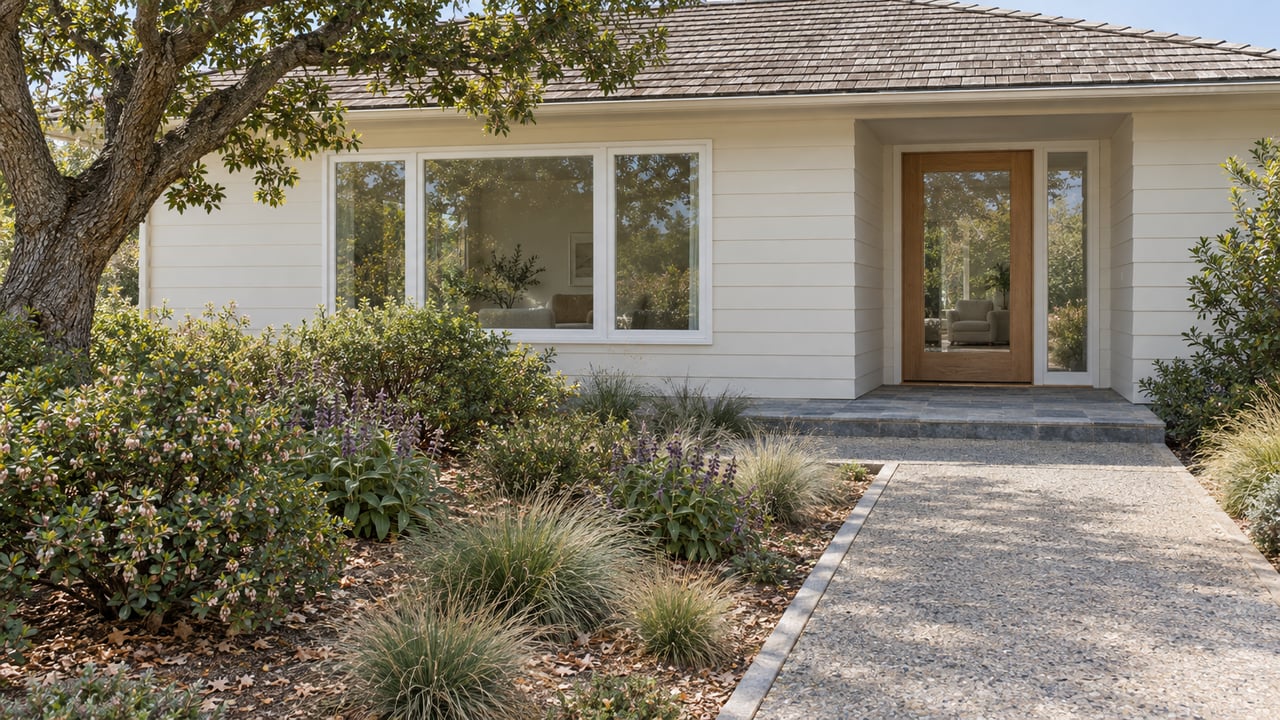
In Monterey, the Fixture Count on File Is the Water Budget You're Buying
October 22, 2026
October 22, 2026
"I own a vacant lot in Monterey," one property owner wrote to the State Water Resources Control Board. "The [order is] impacting my ability to build a house. Please act as soon as possible." Monterey County NOW editor Sara Rubin quoted that letter in a column on the long list of comment letters asking the state to allow new water meters on the Peninsula again.
That owner has land and no water to build with. Most Monterey buyers face a smaller version of the same limit. The new recycled water supply is finished, yet the order that blocks new connections and added use at existing addresses is still in force. Until that changes, anything you add to a Monterey home has to be paid for with water credits already tied to that parcel. A home's fixture count and credits on file are part of what the purchase price buys, and the water district's files are where they are kept.
The Monterey Peninsula Water Management District, or MPWMD, gets involved before any remodel is planned. Under District Rule 141, every transfer of residential ownership triggers mandatory water conservation requirements. MPWMD's buying and selling page says either the seller or the buyer can complete the required retrofits. A buyer can ask for up to six months after the purchase date to comply, and must file a certification describing the plan.
The same page explains what an open permit usually means: a permit that was never finalized, a possible unresolved violation, or unpaid fees. It also says a notice of noncompliance is recorded on the property's title. Water permits come with paperwork too. MPWMD's application process says deed restrictions and permits are prepared once a fixture inventory exists, owners sign before a notary, and the District records the documents with the County Recorder. If no inventory is on file, staff schedules an inspection.
For a buyer, that means a house's water history lives in two places: recorded documents and the District's own files. To check a specific parcel, MPWMD lists [email protected] and 831-658-5601 for permit and conservation questions.
MPWMD measures residential water capacity in fixture units, and under Rule 24 each unit equals 0.01 acre-foot of water per year. To review a project, the District compares the fixtures before and after, subtracts any verified credits, and charges a capacity fee on the increase. Under Rule 23, if an increase remains, it has to fit within a jurisdiction's allocation, or the District denies the permit.
| Fixture | Fixture units |
|---|---|
| Regular toilet | 1.3 |
| 0.8-gallon ultra-high-efficiency toilet, deed-restricted | 0.8 |
| One washbasin | 1 |
| Standard tub/shower combo or shower stall | 2 |
| Master bath tub plus a separate shower | 3 |
The City of Monterey's water FAQ adds that a master bath can have two sinks, and the second sink counts as zero units. A standard bathroom with a separate tub and shower counts 4 units instead of 2.
Credits work like a site-specific savings account. According to MPWMD's Rule 25.5, they come from documented permanent removal of fixtures, demolition, or qualifying efficiency upgrades. They can only be used on the same site, and they usually expire after ten years. The District's high-efficiency appliance credit table keeps a 0.5-unit credit for high-efficiency toilets only until January 1, 2027, about two months after this post publishes. So a credit a seller earned years ago may be close to expiring or may have expired already. That is one more reason to confirm a parcel's records directly with the District.
The best-known exception is the second bathroom. MPWMD's Rule 24 protocol allows a qualifying existing home built before May 16, 2001, with fewer than two full bathrooms, to add up to a second full bath without drawing on the jurisdiction's allocation. Capacity fees still apply, and the protocol cannot be used to create an accessory dwelling unit or to serve a new user. The City's water availability FAQ spells out the ceiling: a home with one and a half baths can add at most half a bath, and the two-bath maximum includes the master bath.
An ADU gets no such exception. Monterey's ADU and JADU guidance requires MPWMD to verify that enough water credits exist on the site before you apply for a building permit. If two houses have similar square footage but one sits on a parcel with documented credits, an ADU may be possible on one and not the other until the rules change.
Supply is not the issue on paper. MPWMD says the Pure Water Monterey expansion was completed in October 2025 and that the project now provides 60% of the Peninsula's drinking water. California American Water's 2025 Urban Water Management Plan describes a more gradual ramp. It says some of the expansion water would reach Cal Am in 2026, with the full amount expected in early 2027, and it estimates 2,001 to 2,234 acre-feet per year as reasonably available in normal years, compared with the 2,250 acre-feet the expansion was designed to deliver.
The supply question matters less to individual homeowners than the legal one. Condition 2 of the State Water Board's Cease and Desist Order still prohibits Cal Am from adding service connections or increasing use at existing addresses. The City of Monterey says it has no water credits available to allocate, so private development that needs a water permit is limited to the credits tied to that site. MPWMD Ordinance 197 did give the City a 141-acre-foot allocation from the expansion, effective March 1, 2025. That allocation belongs to the jurisdiction, not to individual property owners.
Commercial owners feel this too. In the same Monterey County NOW column, Del Monte Center's owners wrote that they "must manage around the property's remaining water rights, which can result in merchandising decisions being driven by water availability rather than market demand and the best use of the property." A single-family buyer is dealing with the same limit at the scale of a bathroom.
MPWMD applied on October 21, 2025 to modify the order. Its proposal would rescind Condition 2, keep the reporting requirements, and add supply-and-demand triggers that could bring the restriction back. The State Water Board's amended hearing notice sets out what happens next:
According to Rubin's column, Cal Am senior manager David Pezzini wrote in testimony submitted August 20 that the company "does not object to a temporary suspension of the moratorium." He proposed the suspension last only until July 1, 2030, on the condition that the desalination plant is running. MPWMD General Manager Dave Stoldt told the same columnist that he favors tying any change to measured use:
"We're fine on continued quarterly and annual reporting, and reinstating the [cease-and-desist order] if we can't handle the prosperity. We've got to move this book off the fiction shelf to the reference shelf."
In an August 18 guest commentary in the Monterey Herald, Melodie Chrislock wrote that Public Water Now strongly supports lifting the moratorium.
Cal Am's plan projects the desalination plant to be running by the end of 2029. Several steps remain before then. The State Lands Commission approved a lease for the slant wells on June 23, 2026, but the lease bars construction until other approvals and conditions are met. As of September 12, 2026, MPWMD's status table listed encroachment permits from Marina, Seaside and Sand City as still outstanding. It also listed a groundwater trial hearing set for November 12, 2026. The State Water Board has not issued a decision, and buyers writing offers this fall are working under the rules in place today.
Does a finished recycled water project mean my parcel has more water? No. The City says private projects remain limited to credits tied to the specific site, and the meter restriction is still in effect while the State Water Board proceeding continues.
Who signs off first on a remodel that adds fixtures? In Monterey, a project that needs more water must get City allocation approval before MPWMD will issue a water permit, and a building permit requires a valid MPWMD water permit.
Can water credits move to another property? MPWMD limits credits to the site where they were created and says they generally expire after ten years.
This post is general information, not legal, tax or financial advice. Confirm your own property's situation with MPWMD, the City of Monterey and the right professional before you rely on a permit outcome.
If you are weighing a Monterey home and want to know what its fixture count and water records could mean for the bath, kitchen or ADU you have in mind, J.R. Rouse Properties Group can help you pull that information together before you write an offer. Schedule a free consultation.
Stay up to date on the latest real estate trends.

Our team listens closely, works tirelessly, and puts your goals at the center of everything we do. Whether you're buying, selling, or simply exploring your options, we’re here to guide you with expertise, every step of the way.
J.R. Rouse Properties Group
490 Lighthouse Ave Pacific Grove CA 93950 J.R. Rouse | CA DRE# 01299649 | MLS ID 70010296